Often described as Scotland's Route 66, the North Coast 500 (NC500) loops around the rugged, elemental coastline of the Scottish Highlands. Starting and ending at Inverness Castle, it is an undeniable magnet for motorcyclists. But for adventure riders specifically, the joy is not just in the main loop, but in the myriad single-track detours and light gravel farm tracks that branch off into the wilderness.
The Route Breakdown
The primary route covers just over 500 miles. On a heavy ADV bike, you could theoretically complete the loop in two grueling days, but that entirely defeats the purpose. To account for unpredictable weather, sheep traffic, and impromptu gravel excursions, allocate a minimum of four days. Five to seven days is optimal.
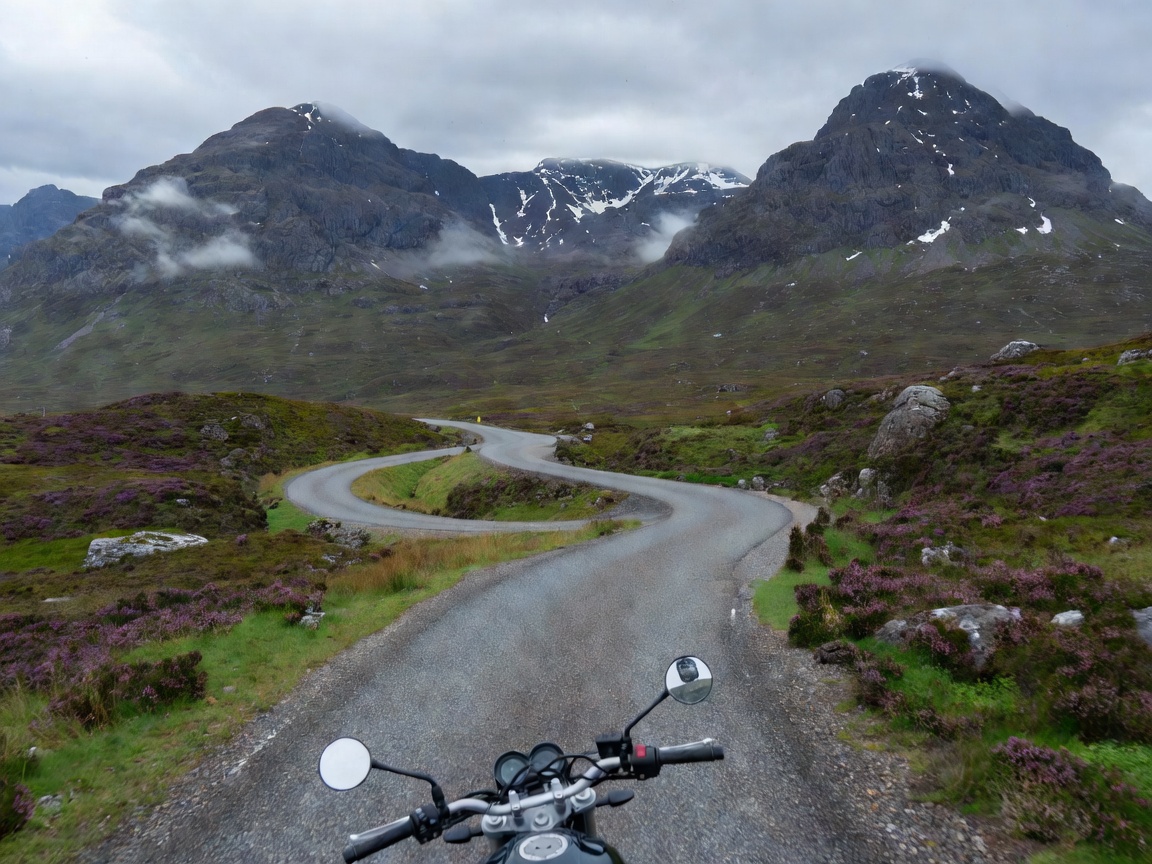
The western coast is where the route shines for riders. The tarmac transitions from sweeping two-lane highways to tight, undulating single-track roads with passing places. The Bealach na Bà (Pass of the Cattle) is the most infamous section. Rising from sea level to 2,054 feet, it features tight hairpins and gradients up to 20%. While fully paved, the condition of the tarmac can be broken, demanding good clutch control and a steady hand, particularly on larger machines loaded with luggage.
Off-Road and Gravel Opportunities
Scotland strictly enforces the Land Reform Act (2003), which grants public access rights to non-motorized traffic, meaning true wild off-roading on motorcycles is largely prohibited without landowner permission. However, "light off-road" adventure can be found on legal unclassified roads and forestry tracks that crisscross the interior.
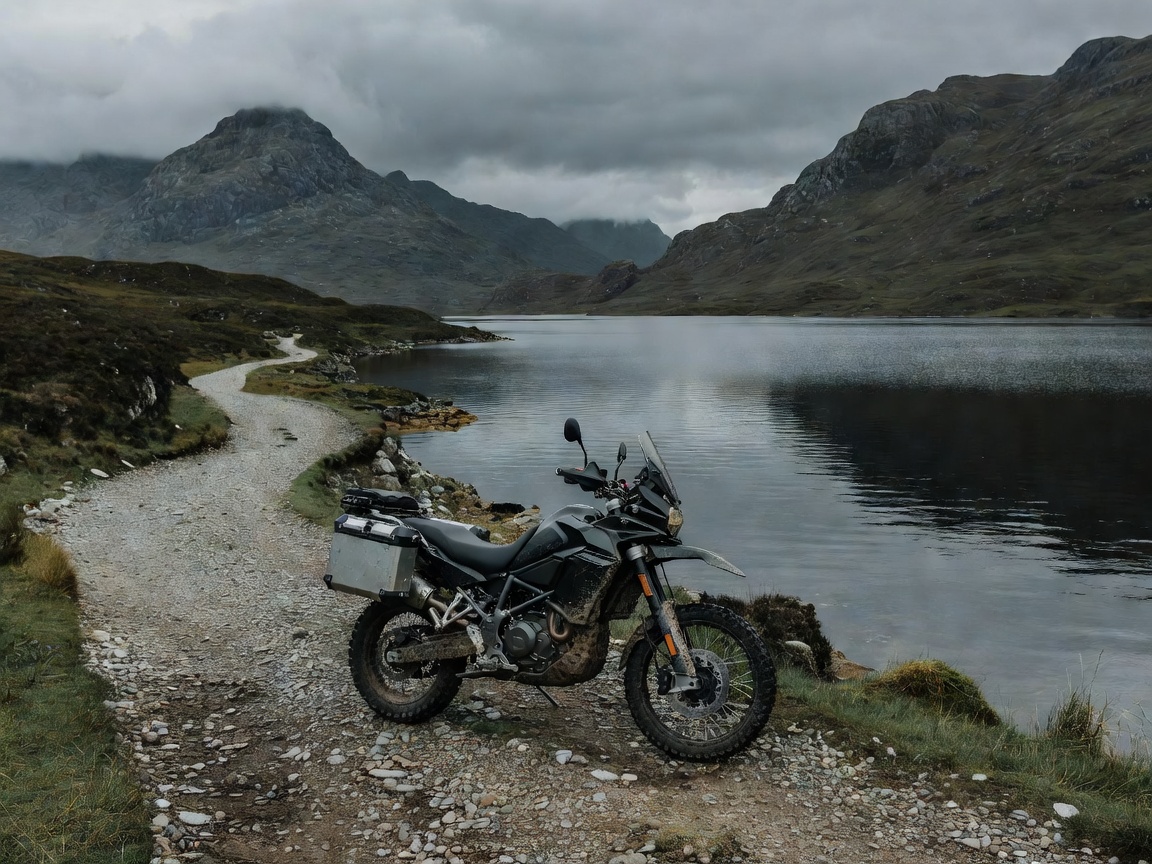
Look for deviations off the A836 along the north coast. Several hard-packed dirt trails lead out to isolated headlands and lighthouses. These are generally hard-packed gravel and easily manageable on bikes with 50/50 tires. During wet weather (which is frequent), these tracks can develop slick muddy sections, so proper tread depth is recommended.
Motorcycle Setup & Preparation
Weather protection is paramount. You can experience driving rain, high winds, and bright sunshine within a two-hour window.
- Tires: A 70/30 or 80/20 street-biased adventure tire is ideal. The vast majority of your miles will be on tarmac, but the added tread block spacing helps when navigating muddy farm run-offs on single-track roads.
- Luggage: Soft panniers are generally preferred. Some of the stone walls flanking the tight western roads leave little margin for error, and hard aluminum boxes can catch out unwary riders.
- Fuel: Fuel stations are sparse on the western and northern edges. You do not need an expedition tank, but a range of 150 miles is strongly recommended. Keep an eye out for 24-hour automated pumps, which are becoming more common in remote villages.
The Highlights
- Unmatched coastal and mountain scenery.
- Engaging, technical riding on single-track roads.
- High availability of motorcycle-friendly accommodation.
- Exceptional seafood and local hospitality.
The Challenges
- Highly unpredictable, often severe weather.
- Midges (biting insects) are brutal in late summer.
- Peak summer months bring heavy campervan traffic.
- Strict laws limit true wild off-roading.
When to Ride
May and September are the optimal windows. May traditionally offers the driest weather and precedes the worst of the midge season. September provides beautiful autumnal colors and fewer tourists. July and August are crowded; you will spend excessive time pulling into passing places to yield to large motorhomes navigating roads they are barely equipped to handle.